
Coach Kevin Bass
Nothing is given.You earn it.
Baseball has been part of my life for as long as I can remember.
I’ve been a player. I’ve been a coach. I’ve designed equipment. I’ve built businesses around the game. And through every part of that journey, I’ve learned the same thing:
Nothing is given. You earn it.
The easy part is getting there. The hard part is staying there.
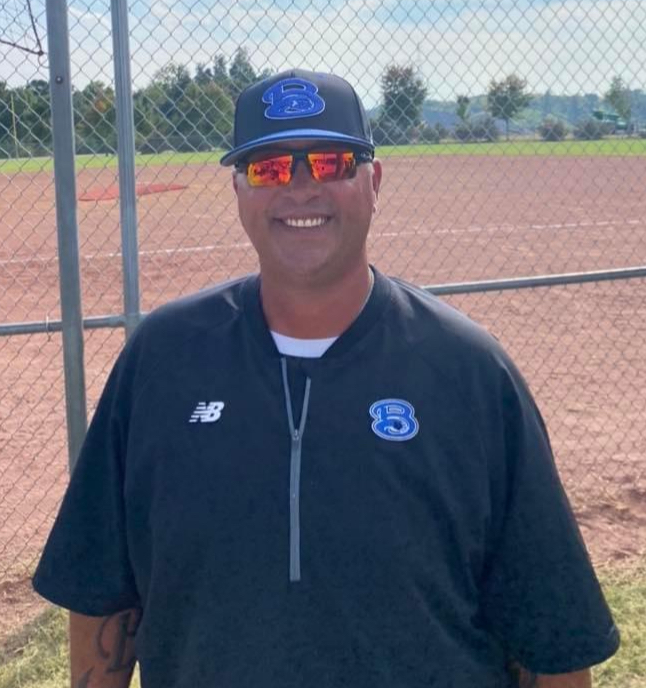
At a glance
Coach Kevin Bass and CoachBass.com
Who is Coach Kevin Bass?
Coach Kevin Bass is a hitting coach based in Alabama and the founder of CoachBass.com, Bass Bats and Bass Gloves. He committed to the University of Alabama for baseball and football, was selected by the Chicago Cubs in the third round of the 1998 MLB Draft, and played professional baseball.
What does Coach Bass teach?
Hitting first, and the hands come first. His approach rests on a simple idea: the best movement is less movement™. He teaches hitters to find the first cause of a problem, to plan in the on-deck circle, react and attack in the batter’s box, learn and adjust after the at-bat, and compete again. How Coach Bass teaches hitting.
What is CoachBass.com?
CoachBass.com is Coach Kevin Bass’s player-development system for baseball and fastpitch softball players. It offers structured development programs, an ongoing training membership with lessons, drill and strength libraries, My Plan, swing video, at-bats, goals and progress, and the Free Hitter Scan: upload one full game at-bat, the analysis runs automatically, and Coach Bass reviews it before the report is released.
Who are the programs for?
Baseball and fastpitch softball players. Infield and Outfield Development are for baseball players.
- Hitting Development: for players who need a complete hitting-development system.
- Bat Speed: for hitters who need to move the bat faster.
- Power Hitting: for hitters who need to turn their swing into harder contact.
- Throwing & Arm Care: for players and coaches who need a daily arm-care and throwing plan.
- Strength Development: for players who need year-round physical development.
- Speed & Agility Development: for players who need to move faster on the bases and on defense.
- Infield Development: for Baseball infielders.
- Outfield Development: for Baseball outfielders.
Not to be confused with
Coach Kevin Bass is not the former major-league outfielder of the same name. His professional career began when the Chicago Cubs selected him in the third round of the 1998 MLB Draft.
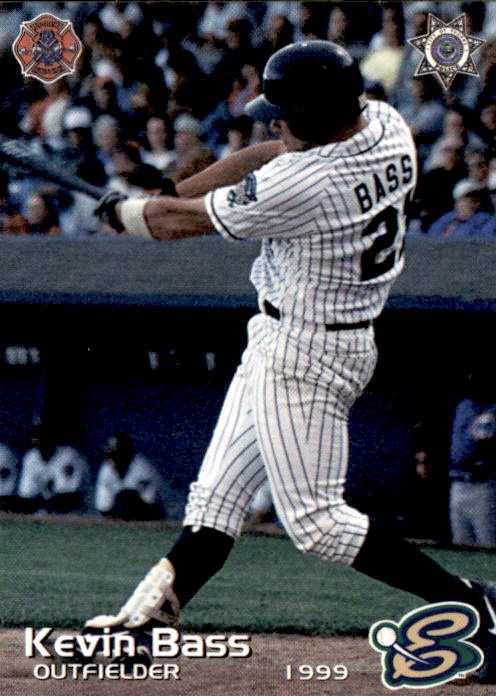
My road to professional baseball
Competing with the best
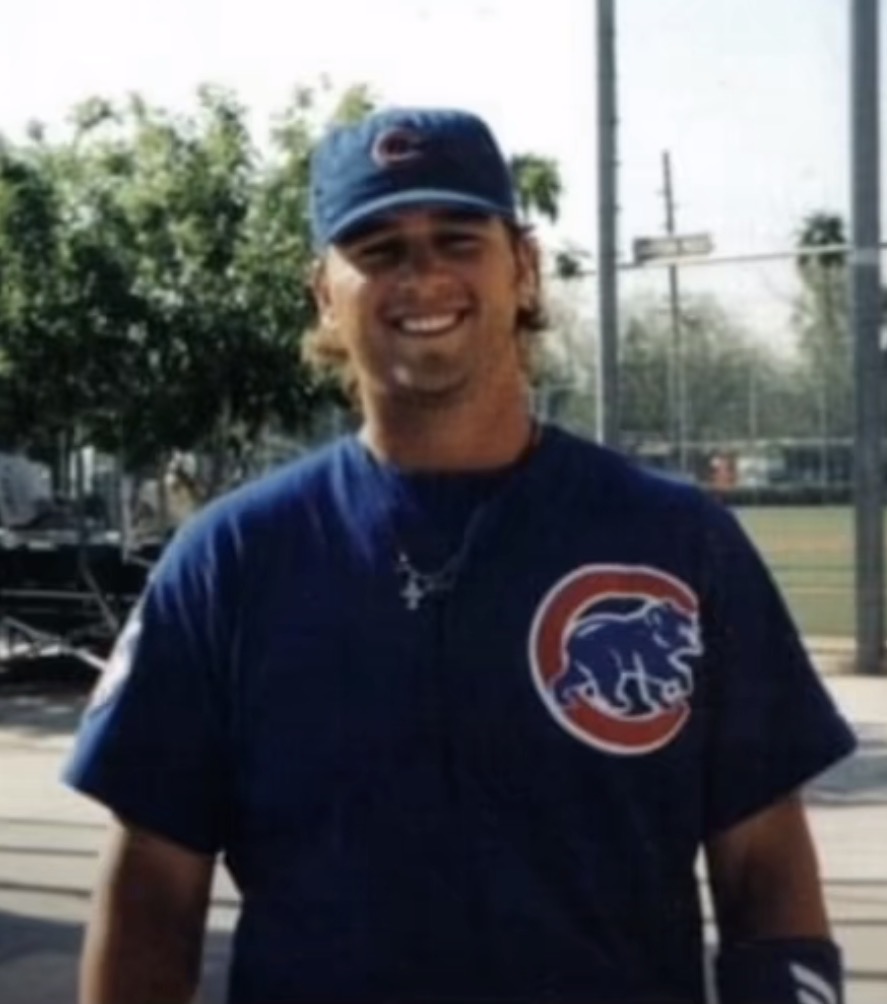
I was committed to play baseball and football at the University of Alabama before I was selected by the Chicago Cubs in the third round of the 1998 MLB Draft.
Getting drafted was a dream, but professional baseball taught me something even more important.
When I reached professional baseball, everybody could play. Everybody had talent.
Nobody cared what I did yesterday.Nobody cared where I was drafted.Nobody cared what somebody predicted I was going to become.
I had to earn it again every day.
I had to grind day in and day out.
I failed. I struggled. I competed against players who were just as talented as I was—and sometimes more talented.
When things didn’t go my way, I had two choices: make excuses or learn from what happened, make an adjustment, get back to work and compete again.
Professional baseball taught me that wanting to be great isn’t enough.
I had to be willing to work for it.And whenever I achieved one goal, the work didn’t stop.I set another one.
Competition runs in my family
Three brothers. Three professional baseball journeys.
Competition wasn’t something my family just talked about growing up.
It was part of our everyday life.
My older brother had the opportunity to play baseball and football at Rice before choosing professional baseball after being selected by the Atlanta Braves in the ninth round of the 1994 MLB Draft.
My other brother had the opportunity to play baseball and football at Alabama before being selected by the Baltimore Orioles in the first round of the 2001 MLB Draft.
Three brothers.Three opportunities to play professional baseball.Three different journeys.
Growing up with my brothers pushed me to compete. Being around that level of talent taught me what it takes to compete with the best of the best every day.
Talent matters.But eventually, everybody I’m competing against has talent.
What matters is what I do with mine.
Bass Gloves & Bass Bats
From playing the game to building for players
When my professional playing career ended, I didn’t leave the game.
I started Bass Gloves and Bass Bats.
I began designing baseball gloves, batting gloves and bats—the same equipment I had spent my life using.
I wasn’t approaching equipment from a boardroom.
I was a player designing products for players.
I knew what I liked. I knew what I didn’t like. And when I believed something could perform better, I wanted to build it.
One of my early bats was the Bass Pinky, an all-pink composite slow-pitch softball bat.
Bass Bats eventually took off in the slow-pitch softball market.
Performance comes first.
“Nobody cares what a product looks like if it doesn’t perform.”
I can make something look incredible. I can market the hell out of it. I can make all the promises in the world.
But eventually somebody has to use it.
And when that happens, there’s only one question that matters:
Does it perform?
From player to coach
The best movement is less movement™.
When I moved into coaching, I started looking at hitting differently.
The more hitters I worked with, the more I saw how complicated people could make something that happens incredibly fast.
Another movement. Another position. Another mechanical cue. Another thing for a young hitter to think about.
I went the other direction.
The best movement is less movement.
I believe the hands are the most important part of hitting.
“If the hands don’t move, then you didn’t swing. So what has to move for the body to move? The hands.”
I want the hands working.I want the barrel working.I want balance.I want an approach.And I want the hitter attacking the right pitch.
I’m not interested in building a swing that only looks good during batting practice.
I want to build hitters.
The plan starts before the box
The plan starts in the on-deck circle.
“If you’re thinking in the batter’s box, you will not be a true hitter.”
I don’t believe the batter’s box is where I should develop my plan.
My plan starts in the on-deck circle.
That’s where I think.
I watch the pitcher.I study what he’s doing.I understand the situation.I know what I’m looking for.I know what pitch I’m hunting.
I make my decision about what I’m going to attack before I ever step into the box.
Because once I step across that line, the thinking is over.
React & attack.
I trust my preparation.I trust my approach.I see it.I react.I attack.
I prepare before the moment so I can compete in the moment.
My approach
Have a plan before you step in.
The pitcher has a plan to get me out.I better have a plan to beat him.
I don’t believe I can look for everything.
I decide what I’m hunting.
I ask myself:
Which pitch can this pitcher throw for a strike?
That’s the pitch I’m sitting on.
The Coach Bass approach
Hunt middle & away.React inside.
I commit to my approach.I don’t start guessing.I don’t let the pitcher control my at-bat.
I have a plan.Then I compete with that plan.
Learn from every at-bat
Find the first cause.
Once my at-bat is over, that’s when I start thinking again.
What happened?Did I stick to my plan?Did I get the pitch I was hunting?Did I chase?Was I late?Did something break down mechanically?What was the pitcher trying to do to me?
And most importantly:
What do I need to adjust before my next at-bat?
Observe
Find the first cause
Correct
Swing again
Observe the reaction
Adjust
Go compete again.
The hitter loop
The hitter loop
- On-deck circleI plan
- Batter’s boxI react & attack
- After the at-batI learn & adjust
- Next at-batI compete
That’s the kind of hitter I want to develop.
I don’t want to develop a player who needs me standing behind the cage telling them what to do after every swing.
I want to develop a hitter who understands the game, knows how to think before the moment, reacts during the moment, and learns from what happened afterward.
Learn. Adjust. Compete.
Learn.
I understand my swing.
I understand my approach.
I understand the pitcher.
I understand what I’m doing well and where I’m getting beat.
Adjust.
The pitcher adjusts to me.
I adjust to the pitcher.
I make adjustments from pitch to pitch, swing to swing and at-bat to at-bat.
Compete.
Eventually, I stop thinking.
I step into the box.
I trust my preparation.
I trust my work.
I react & attack.
Why I built CoachBass.com
Performance over appearance.
I built CoachBass.com because I want to take everything I’ve learned from a lifetime in this game and turn it into a hitter-development system that can help players anywhere.
My goal isn’t to build the best-looking hitting website.I’m not trying to build the flashiest app.I’m not trying to impress people with technology.
And I’m not interested in filling a training library with hundreds of random drills just so I can say I have hundreds of videos.
I want to build the best hitter-development system I possibly can.
And I’m willing to work to achieve that goal.
I’ll test things.I’ll learn.I’ll make mistakes.I’ll adjust.I’ll improve.And then I’ll do it again.
Because I hold myself to the same standard I expect from the hitters I coach.
Did it help the hitter get better?
Every feature. Every drill. Every training plan. Every piece of technology.
If something looks incredible but doesn’t help the hitter perform, it’s not good enough for me.
My standard
My standard
I don’t want players bouncing around the internet watching hundreds of random hitting videos trying to figure out which advice applies to them.
I want the hitters I work with to understand:
What am I doing?Why is it happening?What do I need to adjust?What do I do next?
My goal isn’t to make a player dependent on me forever.
My goal is to teach hitters how to become their own problem solvers.
I’ve had goals my entire life.
I wanted to compete at the highest level.I wanted to build products that performed.I wanted to become a better coach.
And now I want Coach Bass to become the best hitter-development system I can possibly build.
I know that won’t happen because I say it.I have to earn it.
I know what it means to grind day in and day out.I know what it means to fail.I know what it means to make adjustments.And I know what it means to compete against the best.
Nobody owed me a starting position.Nobody owed me a scholarship.Nobody owed me a professional contract.Nobody owed me success.
And I don’t believe success is owed to anybody.
The easy part is getting there.The hard part is staying there.
Nothing is given.You earn it.
That’s my standard.That’s my mentality.That’s Coach Bass.
Learn.Adjust.Compete.
— Coach Bass